Electrical installation modernisation without downtime
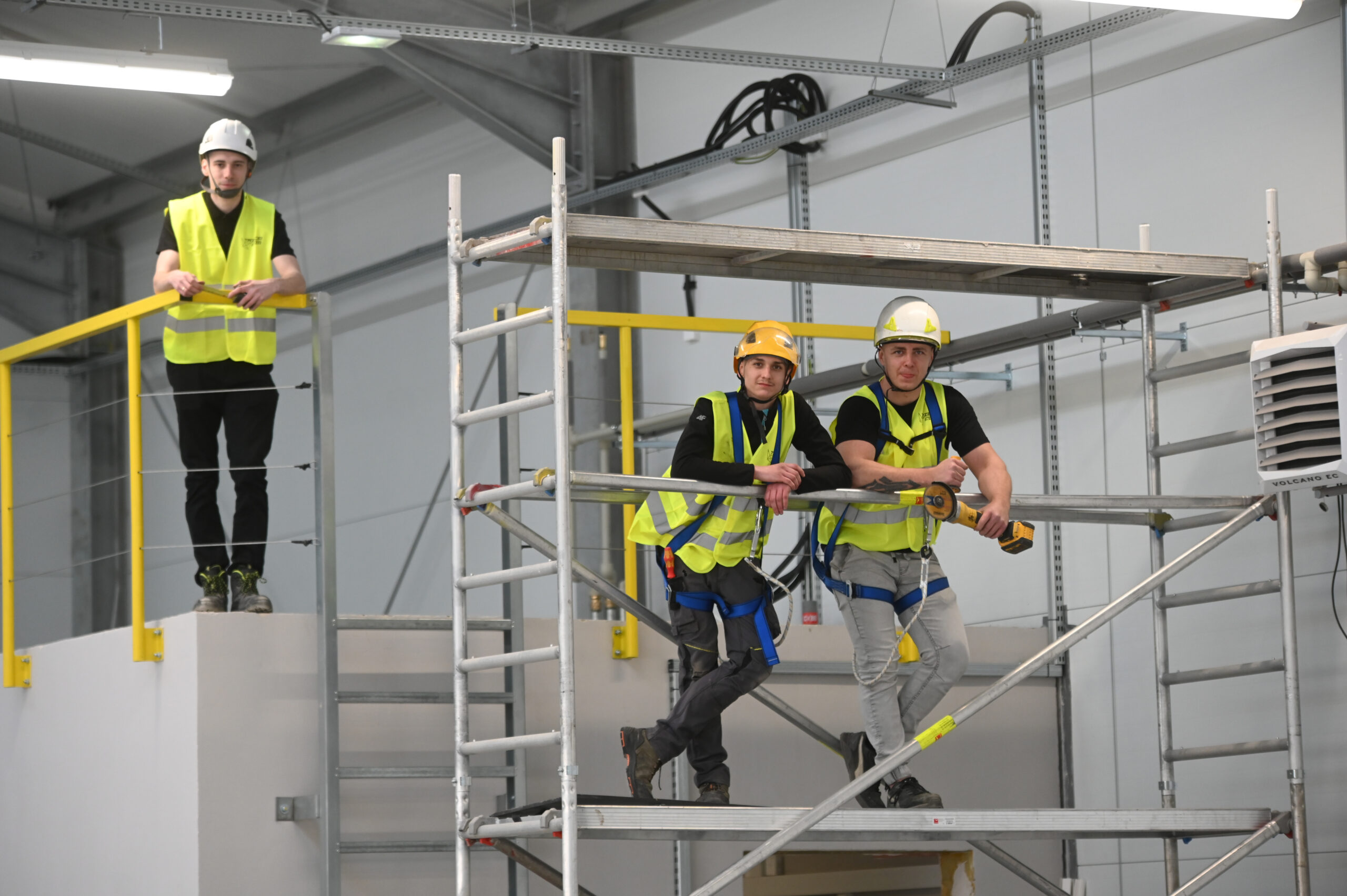
Modernising an electrical installation in a manufacturing plant does not necessarily mean shutting down the entire facility for several days. In many cases, most of the work can be completed while the plant continues to operate, with essential changeovers scheduled during short maintenance windows, planned production shutdowns, weekends or periods of reduced production.
However, this does not mean that every installation can be modernised without even a brief interruption to the power supply. Much depends on its design, available spare capacity, the possibility of separating individual circuits and the importance of particular devices to the production process.
For this reason, a responsible contractor should not promise modernisation “without any downtime” before carrying out an audit. The installation, actual loads and technological dependencies must first be understood. Only then can a plan be developed to minimise interruptions and maintain the operation of the plant’s most critical areas.
What does this process look like? What should be checked before work begins, and how can modernisation be prepared so that it does not turn into uncontrolled downtime?
Industrial electrical installations operate under much more demanding conditions than those found in residential buildings. They supply machinery, motors, production lines, ventilation systems, compressors, automation systems, lighting and auxiliary infrastructure. They often operate for many hours a day and sometimes continuously.
At the same time, manufacturing plants are constantly changing. New machines, workstations and production lines are added. Equipment capacity increases, the layout of the production hall changes and solutions originally intended to be temporary remain in place for years.
Electrical installation modernisation should be considered particularly when:
- protective devices frequently disconnect individual circuits,
- switchboards or cables become excessively hot,
- switchboards no longer have space for additional devices,
- the installation does not have sufficient spare capacity,
- the technical documentation is outdated or does not reflect the actual installation,
- the plant is planning to install a new machine or production line,
- additional devices are being connected to arbitrarily selected circuits,
- the installation has been modified repeatedly by different contractors,
- problems occur with power quality or automation systems,
- reactive energy charges have increased,
- a fault in one circuit stops a significant part of the plant,
- electrical test results indicate that corrective action is required,
- spare parts for the existing equipment are difficult to obtain,
- the company is planning further growth, but its electrical infrastructure is becoming a limitation.
The age of an installation is important, but it should not be the only criterion. An installation that is more than ten years old but was properly designed, regularly inspected and adapted to changing requirements may be in better condition than a much newer system that has been expanded without updating the design.
What matters most is the actual technical condition of the installation and whether it still meets the facility’s current operating requirements.
In many cases, yes. However, it is essential to understand what “without stopping production” actually means.
It does not mean that every task should be performed live. It means dividing the project in such a way that:
- only the section being modernised is disconnected,
- other areas of the plant can continue operating,
- critical loads have an appropriate alternative power supply,
- most preparatory work is completed in advance,
- the final changeover time is reduced to a minimum,
- every interruption is agreed with the production and maintenance teams.
In a well-prepared modernisation project, a full plant shutdown is replaced with short, controlled maintenance windows.
In some cases, physically reconnecting the power supply, replacing equipment or rebuilding a switchboard will require the power to be disconnected. Such an interruption should not be concealed or eliminated at any cost. It must be planned carefully.
The most important question is not simply: “Will there be a shutdown?” Instead, the following points must be established:
- which devices will be switched off,
- how long they will remain out of service,
- what will continue operating during that time,
- who will authorise the shutdown and restart,
- what the contingency plan involves,
- what will happen if the changeover does not proceed as planned.
| Stage | Scope of work | Impact on production |
|---|---|---|
| Installation audit | Inspection, testing and analysis of documentation and loads | Usually no shutdown |
| Concept development | Dividing the project into stages and selecting solutions and protection | No shutdown |
| Prefabrication | Preparing switchboards and components away from the installation site | No shutdown |
| Route preparation | Installing supports, cable routes and some cables | Usually no shutdown or only local interruptions |
| Circuit changeover | Disconnecting the old system and connecting the new one | Short, scheduled maintenance window |
| Testing and verification | Checking the safety and operation of the system | Local interruption or test operation |
| Commissioning | Controlled energisation of loads and installation monitoring | Gradual restart of production |
| Documentation | Updating diagrams, labels and operating instructions | No shutdown |
The first stage of modernisation should be a thorough assessment of the existing installation.
It is not enough to open a switchboard and check whether there is any free space. The installation must be treated as a complete system in which switchboards, cables, protective devices, machinery, control systems and power sources interact with one another.
An audit may include:
- reviewing diagrams and as-built documentation,
- comparing the documentation with the actual installation,
- identifying the circuits being supplied,
- assessing the condition of switchboards and electrical equipment,
- checking cable sizes and installation methods,
- analysing protection selection and settings,
- assessing protection selectivity and coordination,
- carrying out the required electrical tests,
- verifying protection against electric shock,
- assessing the earthing system and equipotential bonding,
- analysing actual loads,
- checking the available spare capacity,
- identifying critical equipment and circuits,
- analysing power quality where required by the installation or existing problems.
In an operational facility, it is worth relying on actual operating data. Ratings shown on equipment nameplates do not always reflect how the equipment is used in practice. Starting currents, load diversity, technological cycles, phase loading and the behaviour of the installation during production peaks also matter.
Only this information makes it possible to determine which components must be replaced, which can remain in service and which should be prepared for future expansion.
At Trzecia Faza, we carry out electrical installation testing and inspections, providing investors not only with test results but also with information about the installation’s actual condition and the components that require attention.
Not every device in a manufacturing plant has the same importance for production continuity.
Switching off lighting in an unused part of a warehouse has very different consequences from shutting down a control system, process cooling, technological ventilation, a compressor room or a critical production line.
Before modernisation begins, loads should therefore be divided into groups.
Critical loads
These are devices whose sudden shutdown may:
- stop the entire production process,
- damage products or materials,
- cause data loss,
- create a risk to people,
- disrupt safety systems,
- lead to a lengthy and expensive restart.
Important loads
These may be switched off for a short, previously agreed period, but a longer shutdown would restrict the plant’s operation.
Non-critical loads
Their temporary shutdown does not directly affect safety or the plant’s most important processes.
This classification helps establish the sequence of work and determine which circuits require temporary power and which can be disconnected during a scheduled maintenance window.
Infrastructure that is not always regarded as part of production may also be essential to keeping the plant operational. This includes servers, computer networks, fire protection systems, access control, ventilation, cooling, compressed air systems, pumps and automation systems.
Electrical installation modernisation should address more than the plant’s current requirements. If the company is planning to purchase new machinery, increase production or expand the facility, these plans should be considered during the concept stage.
The analysis should include:
- the facility’s connection capacity and contracted demand,
- current maximum power demand,
- loading of transformers and main supply lines,
- load distribution between phases,
- motor starting currents,
- the characteristics of power electronic loads,
- the planned capacity of new equipment,
- the likelihood of machines operating simultaneously,
- spare capacity in switchboards and cable routes,
- the possible need to increase the connection capacity.
A common mistake is to size a new circuit based only on the machine’s rated power. In practice, the starting method, manufacturer’s requirements, operating characteristics, power factor, automation systems, auxiliary equipment and impact on the rest of the installation must also be considered.
A new machine may require more than simply installing a cable. It may also require switchboard modifications, different protective devices, increased capacity, improved protection selectivity or changes to the reactive power compensation system.
Once the necessary data has been collected, a modernisation plan can be prepared.
It should define:
- the scope of work in each area,
- the sequence in which circuits will be rebuilt,
- possible changeover points,
- required shutdowns,
- the expected duration of each interruption,
- the method of supplying critical loads,
- the principles of cooperation with production and maintenance teams,
- the people responsible for making decisions,
- the conditions for restarting equipment,
- the procedure to follow if the changeover is unsuccessful.
The safest approach is usually to divide modernisation into stages that are as independent as possible. Instead of rebuilding the entire installation at once, individual switchboards, sections of the production hall or groups of loads can be modernised one after another.
This limits the shutdown area, makes it easier to identify irregularities and prevents risk from being transferred to the entire plant.
One of the most effective ways to reduce downtime is to move as much work as possible away from the operational facility.
A new switchboard can be prepared in advance by:
- designing and configuring it,
- fitting the required equipment,
- applying labels,
- completing the internal wiring,
- checking compliance with the diagram,
- carrying out functional tests,
- preparing it for rapid connection at the facility.
This means the team does not have to build the switchboard from the beginning during the maintenance window. Instead, it performs a previously prepared changeover.
Electrical switchboard prefabrication under controlled conditions reduces the amount of work carried out inside the production hall, lowers the risk of errors and shortens installation commissioning time.
Cables, labels, supporting structures, sections of cable routes and connection components can be prepared in the same way.
Every hour spent preparing away from the changeover site can mean a shorter production shutdown.
Many elements of the modernisation project can be completed without interfering with operational circuits.
Depending on the facility, this may include:
- installing new cable routes,
- preparing penetrations,
- positioning new switchboards,
- routing cables without connecting them,
- applying labels,
- preparing structures and supports,
- installing additional protective components,
- preparing positions for new machinery,
- checking that delivered components comply with the documentation.
The work must still be coordinated with the plant’s operation. Employee and forklift traffic, transport routes, machinery zones, dust, temperature, humidity, potentially explosive atmospheres and other hazards specific to the process must all be considered.
Attempts to minimise downtime must never increase the risk of an accident or compromise production safety.
If part of the installation must be disconnected while critical loads remain operational, an appropriately designed temporary power supply may be considered.
Depending on the requirements, this may use:
- another section of the existing installation,
- a temporary switchboard,
- an independent supply line,
- a generator,
- an uninterruptible power supply,
- a solution combining several power sources.
A temporary supply must not be improvised. Its capacity, protection, earthing, selectivity, changeover conditions and behaviour during equipment start-up must all be verified.
It is also necessary to establish how long the load can operate on the alternative supply and what will happen if that supply fails.
Not every device can be safely supplied by any generator or UPS. Automation systems, drives, variable-frequency drives, electronic equipment and devices with high starting currents may require particular analysis.
The changeover is the most critical stage of the modernisation project.
It should be prepared as a detailed procedure defining:
- the conditions for shutting down equipment,
- the sequence in which circuits will be disconnected,
- how the work area will be secured,
- the sequence of disassembly and connection,
- the scope of testing,
- the controlled energisation procedure,
- the sequence in which loads will be restarted,
- the people authorised to approve progression to the next stage,
- the criteria for stopping the work,
- the procedure for returning to the previous configuration.
All devices, cables, terminals, labels, tools, diagrams and spare parts should be prepared in advance. A single missing component during a night-time or weekend changeover can extend the shutdown by many hours.
It is also good practice to hold a briefing before work begins. Everyone should understand their responsibilities, work area, sequence of activities and method of communication with the maintenance team.
Pressure to minimise downtime must never result in safety procedures being overlooked.
Work on electrical equipment should be carried out in accordance with the operating instructions, the organisation of work applicable at the facility and the requirements for the specific type of work. Activities must be matched to the qualifications and authorisations of the people performing them.
Applicable regulations permit work on electrical equipment:
- while live,
- in the vicinity of live parts,
- after the equipment has been made dead.
Live working is not a method for shortening a modernisation project. It requires appropriate working methods, tools, personal protective equipment, organisation and team preparation.
When work is carried out on equipment that has been made dead, it is necessary, among other things, to:
- disconnect the equipment in a way that prevents voltage from reappearing,
- secure the installation against accidental or intentional energisation,
- label the points of disconnection,
- verify the absence of voltage,
- apply the required earthing,
- establish and mark the work zone.
Facilities also use procedures for locking and labelling energy sources, commonly referred to as LOTO or their internal equivalents.
The organisation of work must consider more than electrical energy. A machine may have several energy sources, including electrical, pneumatic, hydraulic, mechanical or thermal energy. All of them must be identified and properly isolated.
The basis for organising safe work includes:
- the regulation on occupational health and safety when working with energy equipment,
- the regulation on confirming the qualifications of people involved in the operation of equipment, installations and networks,
- the operating instructions applicable at the facility,
- equipment technical documentation,
- manufacturers’ requirements,
- the relevant Polish Standards for the scope of work.
Depending on the nature of the modernisation, relevant requirements may include the PN-HD 60364 series concerning low-voltage electrical installations, PN-EN 50110-1 concerning the operation of electrical installations, PN-EN IEC 61439 concerning low-voltage switchgear and controlgear assemblies and PN-EN IEC 60204-1 concerning the electrical equipment of machines.
The exact scope of applicable regulations, standards and formal requirements must always be established individually for each project.
Completing installation work does not mean that the system is ready to operate.
Before commissioning, the required inspections, tests and measurements must be carried out. Their scope depends on the type of work and the components that have been modified, but may include:
- verifying the continuity of protective conductors,
- insulation resistance testing,
- checking protection by automatic disconnection of supply,
- earth fault loop impedance testing,
- testing residual current devices,
- testing the earthing system,
- checking the phase sequence,
- verifying protection settings,
- checking interlocks and signalling,
- functional testing of control systems,
- checking emergency circuits,
- verifying labels and compliance with the diagrams.
Commissioning should be completed in stages. Instead of energising every load at once, individual sections should be started one by one while the behaviour of the installation is monitored.
This makes it possible to identify irregularities before they affect the entire process.
Once normal loading has been reached, it is also worth checking:
- connection temperatures,
- phase loading,
- current values,
- voltage behaviour,
- the operation of protective devices and automation,
- the effect of new loads on power quality,
- the reactive power level.
New machinery, power supplies, variable-frequency drives and LED lighting can change the facility’s reactive power profile. Following a major modernisation, it is therefore worth checking whether the existing reactive power compensation system still matches the installation’s actual operating conditions.
One of the most common mistakes following modernisation is leaving the old documentation unchanged.
After several months, nobody may remember:
- which circuits were rebuilt,
- where the new equipment is supplied from,
- which settings were applied,
- why a particular solution was selected,
- where the isolation points are located,
- how much spare capacity remains available.
After the work has been completed, the documentation should be updated to reflect the actual installation.
Depending on the scope of modernisation, the following documents may be required:
- single-line diagrams,
- cable route plans,
- circuit schedules,
- switchboard descriptions,
- lists of installed equipment,
- protection settings,
- test reports,
- operating instructions,
- switching and isolation procedures,
- copies of equipment configurations,
- as-built documentation.
Accurate documentation reduces future servicing time, makes subsequent expansion easier and limits the risk of incorrect decisions during a fault.
Every major changeover should have a contingency plan.
The plan should establish what will happen if:
- the new system does not start correctly,
- it fails the required tests,
- a problem occurs with the automation,
- the documentation is found not to reflect the actual installation,
- a component required to complete the work is unavailable,
- the previous power supply must be restored.
It should define the point up to which it remains safe to return to the previous configuration and which components must remain available until the correct operation of the new system has been confirmed.
For industrial automation systems, current programs, configurations and settings should be backed up. For modular equipment and protective devices, critical spare parts should be available.
A contingency plan does not indicate a lack of trust in the contractor. It demonstrates professional risk management.
Failing to carry out a complete audit
Modernisation begins with the replacement of visible components without checking the cables, loads, protective devices and technological dependencies.
Planning solely on the basis of documentation
A diagram may not include many years of minor modifications. The actual installation must be verified on site.
Failing to cooperate with production teams
A technically correct schedule may prove impossible to implement if it does not take account of the production cycle, machine cleaning, changeovers and restart time.
Attempting to complete everything during a single shutdown
The larger the scope of a single changeover, the greater the risk of extending downtime. Dividing the work into stages provides greater control.
Failing to provide spare capacity for future growth
A new switchboard is already full on the day it is commissioned, and the next machine requires another modification.
Overlooking power quality and reactive power
New equipment can change the operating conditions of the entire installation even if total energy consumption does not increase significantly.
Failing to prepare a rollback plan
Once the changeover begins, there is no safe way to restore the previous system.
Accepting the installation without complete testing and documentation
The installation operates, so the project is considered complete. Problems only become apparent during a fault, an inspection or the next expansion.
The cost of modernising an industrial electrical installation cannot be estimated reliably based only on the size of the production hall or the number of machines.
The cost is influenced by:
- the condition of the existing installation,
- the availability of documentation,
- the scope of testing and design work,
- the number of switchboards being rebuilt,
- the length and method of installing cable routes,
- the parameters of new loads,
- the need to increase power capacity,
- the method used to provide temporary power,
- the required changeover time,
- work carried out at night or on non-working days,
- environmental conditions,
- component availability,
- the scope of automation work,
- testing and as-built documentation.
The lowest-priced offer does not always mean the lowest overall cost for the company.
If the lower price results from omitting preparation, testing, prefabrication or a contingency plan, the saving may quickly disappear during the first unplanned shutdown.
The quotation should therefore be prepared after a site inspection, data collection and confirmation of the actual scope of work.
Before meeting with a contractor, it is worth collecting:
- current installation documentation,
- switchboard diagrams,
- reports from the most recent electrical tests,
- a list of the most important loads,
- data for new machinery,
- information about planned expansion,
- available consumption and load data,
- fault history,
- information about acceptable shutdowns,
- scheduled production stoppages,
- the requirements of the maintenance and occupational health and safety teams.
The more accurate the information provided to the contractor, the more precisely the scope, schedule and changeovers can be planned.
We provide electrical installation and modernisation services for businesses in manufacturing plants, warehouses, industrial buildings and service facilities.
We begin by understanding how the facility operates, its electrical loads, its most important processes and the company’s development plans. This makes it possible to divide the modernisation into stages, prepare the necessary components away from the installation site and minimise the time required for changeovers.
We do not promise zero downtime without first carrying out an analysis. We begin by checking what is technically possible and then prepare a solution tailored to the plant’s actual operating conditions.
If you are planning to connect a new machine, expand a production hall, rebuild a switchboard or modernise an existing installation, contact Trzecia Faza. We will assess the scope of work and help plan the individual stages so that the electrical installation supports your company’s growth instead of becoming a limitation.